MapleDeploy vs Self-Hosted Coolify
Coolify either way. The difference is who runs the server.
Coolify is a free, open-source PaaS that you can install on your own server with a single command. MapleDeploy is managed Coolify with the server included: a dedicated Toronto VM with your own Coolify instance, both looked after for you. Since both run Coolify, this page is about what self-hosting leaves to you, what each costs, and where your apps run.
Side by side
What you get
- Self-hosted Coolify
- Free, open-source Coolify you install on your own server
- MapleDeploy
- Dedicated VM with your own Coolify instance
Coolify
- Self-hosted Coolify
- Upstream Coolify, every feature included
- MapleDeploy
- A public fork, rebased regularly, with a few changes for the managed service
Server
- Self-hosted Coolify
- Bring your own, set up and run by you
- MapleDeploy
- Included, patched and hardened for you
Coolify updates
- Self-hosted Coolify
- Automatic or manual, managed by you
- MapleDeploy
- Handled for you
Backups
- Self-hosted Coolify
- Databases and Coolify's own data on a schedule you set; the server needs your own setup
- MapleDeploy
- Weekly full-server snapshots included
App location
- Self-hosted Coolify
- Wherever your server is
- MapleDeploy
- Toronto, Canada
Pricing
- Self-hosted Coolify
- Free, plus your server
- MapleDeploy
- From $45 CAD/mo, server included
When self-hosting Coolify is the right choice
Self-hosting is Coolify's default, and for a lot of people it's the right call. Coolify's pricing page lists self-hosting as free forever, with full access to all features. It's licensed under Apache 2.0.
The install is a single script on a Linux server. Coolify's docs ask for at least 2 CPU cores, 2 GB of RAM and 10 GB of free disk. From there you get git deploys, one-click services, databases and automatic HTTPS, all from one dashboard.
If you already run servers and enjoy it, Coolify on a VPS is the cheapest way to get Coolify. We'd say that even though we sell the managed version.
What self-hosting Coolify leaves to you
The install takes minutes. The upkeep is what lasts.
- OS updates. Coolify's server patching, marked beta, can install package updates from the dashboard, and security updates automatically once you turn that on. When to patch, and the reboots that follow, are yours.
- The firewall. Coolify's firewall guide lists the ports it uses, 22, 80, 443, 8000, 6001 and 6002, and explains when you can close public access to the last three.
- Coolify updates. Coolify can update itself automatically, or you can update manually from the dashboard. Either way, you choose the setting and deal with any update that goes wrong.
- Disk space. Docker images and build cache pile up over time. Coolify's automated cleanup can run on a schedule or above a disk threshold, with values you pick.
- Backups. Coolify backs up databases to S3-compatible storage on a schedule, and its instance backup saves Coolify's own data. Neither covers the server itself, so recovering a lost machine means rebuilding it.
None of this is hard, but it's never finished. Our guide to self-hosting Coolify vs managed Coolify goes through each part in more detail.
What MapleDeploy handles
MapleDeploy runs the server and the Coolify instance together. You get a dedicated VM in Toronto, ready in minutes, and you deploy through the Coolify dashboard.
- Security hardening. SSH key authentication, fail2ban, outbound SMTP blocking, and automatic security patches, applied before you first log in.
- OS patches. Operating system updates and kernel patches are applied for you. When a kernel update needs a reboot, it happens in a fixed 07:50 UTC window.
- Coolify itself. We run a public fork of Coolify that we rebase regularly against upstream. Its changes cover Canadian branding, MapleDeploy integrations and what a managed server needs.
- Snapshots. Weekly full-server snapshots covering the OS, Coolify, containers, volumes and databases.
Snapshots are disaster recovery, not granular restores. For production databases, you should still set up Coolify's S3 database backups on a daily schedule.
Comparing the cost
Self-hosted Coolify is free. Your costs are the server you install it on and the time you spend keeping it patched, backed up and running.
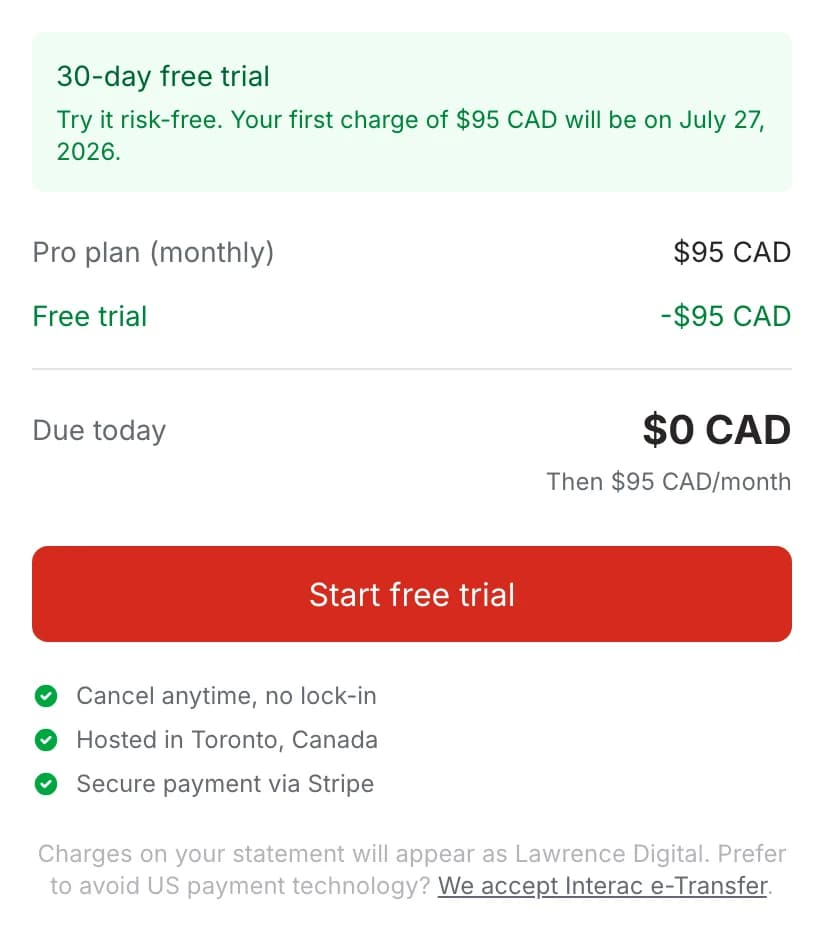
MapleDeploy starts at $45 CAD/month for a dedicated VM with 4 GB RAM, 2 vCPUs and 35 GB of storage. The server, Coolify, patches and snapshots are in that price, with no per-project or usage fees. Starter and Pro include a 30-day free trial.
If you enjoy running servers, Coolify on a VPS will usually cost less. If you'd rather not, the difference buys back the evenings.
Coolify, either way
Because MapleDeploy runs Coolify, what you learn on one carries over to the other. Projects, environments, build packs and the dashboard work the same way. A few one-click templates our Acceptable Use Policy prohibits are left out. If you're still choosing a panel, our Coolify vs Dokploy comparison covers how Coolify differs from its closest alternative.
A self-hosted server runs wherever you put it, so where your data is hosted depends on the provider you choose. Your apps on MapleDeploy are hosted in Toronto, under Canadian jurisdiction, on infrastructure built for PIPEDA compliance, on every plan.
Try it free for 30 days
Start with $0 due today. Your first charge comes after the trial. One flat price, with the server included.
Ready to hand off the server too?
Coolify on a dedicated Toronto VM, patched and backed up for you.